


KT88 Tube Amplifier Matching Guide
A push-pull KT88 amplifier gives you choices a simpler design does not. You get two operating modes, three output taps, four inputs, and a headphone output covering 8 Ω to 300 Ω. On the A88 MK that flexibility is the point: 30 W per channel in ultra-linear, 16 W in triode. It also means the matching decisions you make matter more, not less. This KT88 tube amplifier matching guide covers the six choices that change what you hear. They are speakers, operating mode, sources, headphones, subwoofers and the tubes themselves.
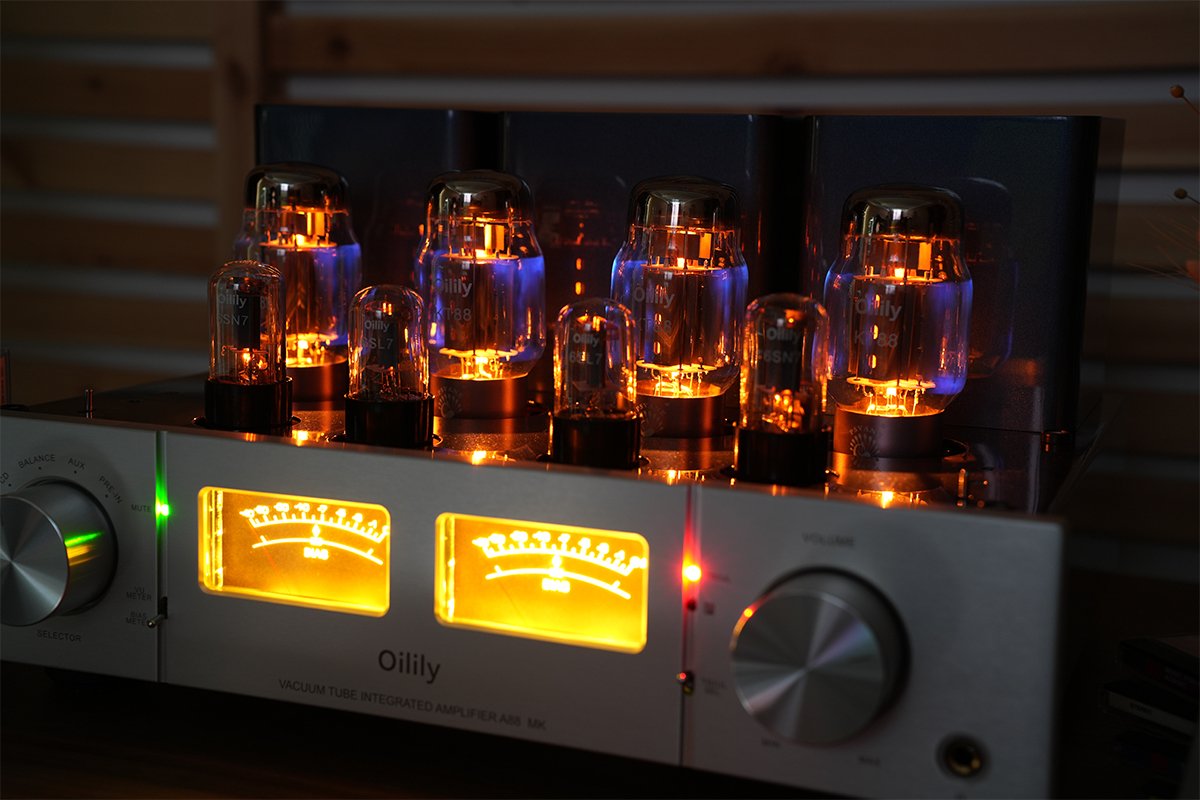
Speaker matching: sensitivity and load for a KT88 tube amplifier
Start with the number that decides everything else: sensitivity. The A88 MK delivers 30 W per channel in ultra-linear and 16 W in triode at 8 Ω. That rating holds from 20 Hz to 20 kHz at 1% THD. This is enough power for a wide range of speakers. But “works” and “sounds effortless” are not the same thing.
As a working rule, look for 88 dB or higher at 2.83 V. Between 88 and 93 dB the amplifier has headroom to spare. Most medium-sized floorstanders and standmounts fall in that window. Below 86 dB, in a large room with orchestral material, you will hear the amplifier working. Dynamics compress first. Then the low end loses grip. It will still play, but the sense of ease disappears.
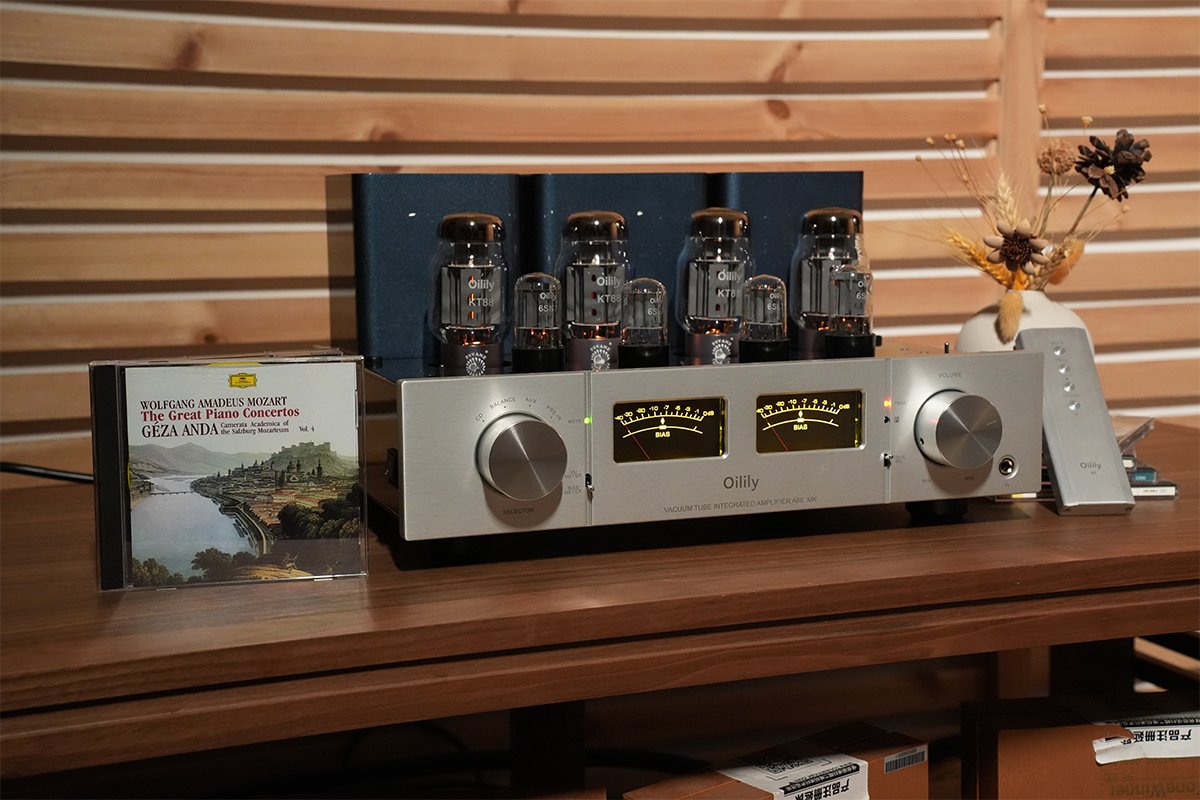
Impedance matters just as much as the number on the box. The rear panel offers 4 Ω, 8 Ω and 16 Ω taps. So connect the speaker to the tap closest to its nominal rating. Avoid a speaker that claims 8 Ω but dips to 3 Ω through the bass. The impedance curve, not the label, decides how hard the amplifier has to work. Push-pull designs handle that dip far better than low-power single-ended circuits. Therefore, the A88 MK will drive speakers that feel like a stretch elsewhere.
One real advantage of a push-pull output stage is damping. A higher damping factor means the amplifier controls cone movement more firmly. On a medium floorstander with two 6.5-inch woofers, you hear it as tighter bass and cleaner transients. The A88 MK holds a bigger speaker together instead of letting the low end drift. Above all, getting sensitivity and impedance right is the foundation for the rest of KT88 tube amplifier matching.
Choosing triode or ultra-linear before you match speakers
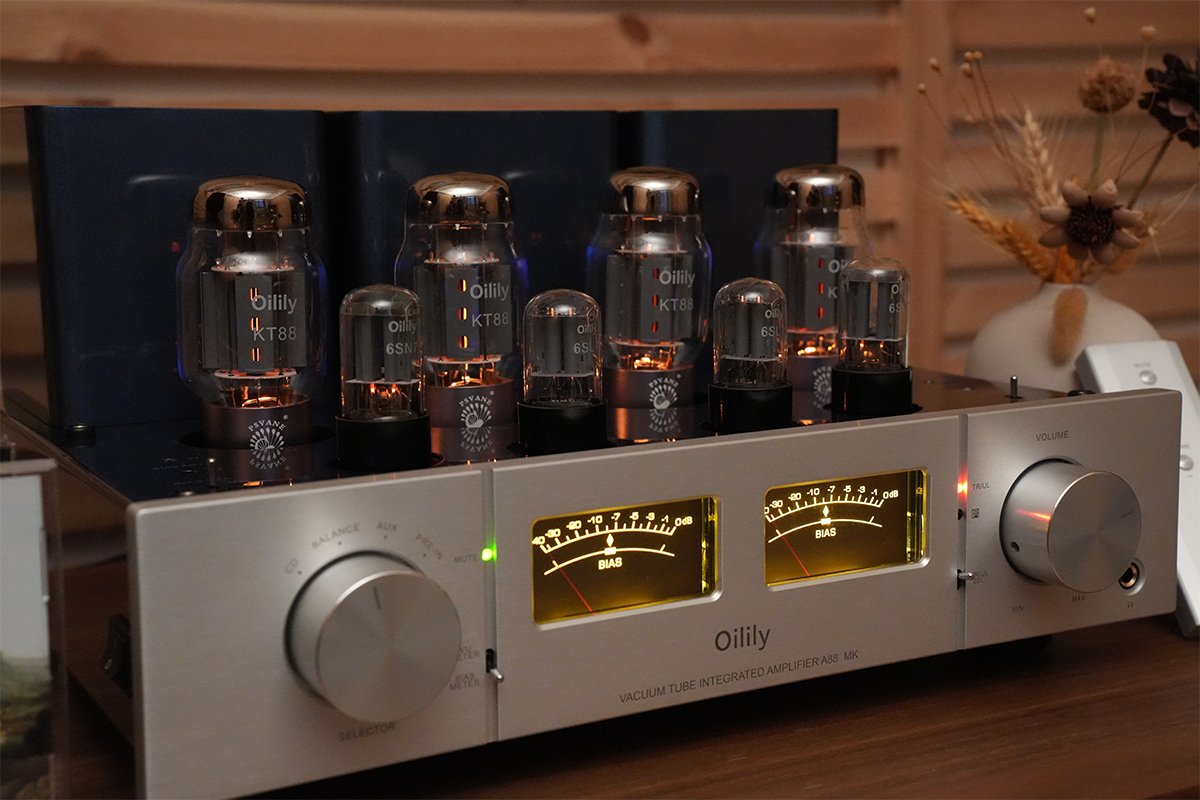
The A88 MK has two operating modes. A button on the front panel switches between them: green LED for triode, red for ultra-linear, triode as the default. However, this is not a subtle tweak. It is closer to owning two amplifiers.
In triode, the output stage runs in a purer, lower-distortion configuration at 16 W per channel. The sound is softer and more continuous. Vocals and strings sit slightly forward. On a high-sensitivity speaker at moderate levels, this mode shows the 91 dB signal-to-noise ratio at its best. The background simply disappears.
Ultra-linear raises power to 30 W and opens up the presentation. Dynamics arrive with more authority. The soundstage gets wider, and large-scale material stops feeling like a compromise. On a mid-sensitivity floorstander, or in a room larger than about 25 square metres, this is usually the mode you leave it in.
So settle the mode first, then judge the speaker. A pair of speakers that sounds thin in triode may be balanced in ultra-linear. Still, the reverse is just as true. Do not audition speakers while switching modes at random. You will end up with a system that never quite locks in.
Source and DAC matching for your KT88 tube amplifier
The input stage is easy to feed. Input sensitivity is 380 mV on the integrated inputs and 820 mV when you use PRE-IN as a power amplifier. Input impedance is 100 kΩ. Any normal line-level source will drive it to full output with the volume control nowhere near the top. For example, a DAC with a 2 V output, a CD player or a streamer all work. There is no need to chase a high-output DAC.
The rear panel provides four inputs: CD, BALANCE, AUX and PRE-IN. You select them with the front-panel switch. The BALANCE input takes an XLR connection from a source that has one. It is a convenience, not a claim that the amplifier is balanced end to end. The circuit inside is single-ended. So treat XLR as a clean way to connect balanced gear, not as a sound-quality upgrade in itself.
PRE-IN is the input most people overlook. It is also the one that changes how the A88 MK fits into a home. It bypasses the volume stage, so the amplifier works as a pure power amp. Therefore, you can drive it from a dedicated preamplifier, from a DAC with a built-in volume control, or from the pre-out of an AV processor. This is how a stereo system and a cinema system share one pair of speakers.
If you play vinyl, budget for a phono stage. The A88 MK has no built-in phono input. Instead, a turntable needs an external phono preamplifier feeding any of the line inputs.
Headphone matching with the A88 MK
The front panel 6.5 mm jack covers headphones from 8 Ω to 300 Ω. In addition, plugging in a pair disconnects the speaker outputs automatically. That range covers almost everything on the market. Low-impedance dynamic and planar designs sit at the bottom, 300 Ω studio and audiophile models at the top.
Two practical notes. First, low-impedance planars that dip below 32 Ω are the hardest load for any output stage. Give them a listen before you build around them. The amplifier drives them, but a dedicated headphone amplifier still has an edge on that load. Second, the volume control has plenty of travel on high-impedance headphones. Fine adjustment at low levels is not a problem.
Treat this output as a useful addition rather than a substitute for a separate headphone rig. For late-night listening from the same system, it does exactly what you want.
Accessory matching for a KT88 tube amplifier
First, cables. 14 to 12 AWG oxygen-free copper is more than enough for the currents involved. Equal lengths to both speakers matter more than the brand printed on the jacket. Keep runs as short as the room allows.
Next, power is straightforward. The A88 MK draws 180 W, so any normal household circuit will carry it. What the amplifier does care about is ventilation. The manual asks for at least 20 cm of clear space above and around the unit. The transformers and the KT88 quad generate real heat across a listening session. In a closed cabinet, that requirement is not optional.
On support, the priority is a level, rigid shelf that loads all four feet evenly. The amplifier weighs 25 kg, and most of that is transformer iron. A shelf that flexes will let the chassis rock. Try feet and isolation platforms only after placement and ventilation are sorted. Above all, they are worth much less than a well-matched pair of speakers.
Subwoofer matching with a KT88 tube amplifier
There is no line-level subwoofer output on the A88 MK, so integration happens at speaker level. Choose a subwoofer with high-level inputs and outputs. Run speaker cable from the amplifier’s output terminals into the subwoofer’s high-level input, then from its high-level output to the main speakers. Many subwoofers also accept a parallel connection from the same amplifier terminals if they lack pass-through outputs.
This is not a workaround. In fact, for a tube amplifier it is the better route. The subwoofer sees the same signal the main speakers see, including the amplifier’s character, so the blend stays coherent. A line-level connection would need a pre-out and a second volume stage. This amplifier provides neither.
Set the crossover between 50 and 70 Hz, depending on where the main speakers naturally roll off. Then start with the subwoofer level lower than feels correct. If the subwoofer announces itself, it is too loud. In other words, the goal is that turning it off makes the room feel smaller, not that turning it on makes the bass obvious.
Tube matching and rolling: KT88, 6550 and EL34
The A88 MK ships with four Psvane KT88-PT output tubes. Two 6SL7 sit in the voltage amplification stage, two 6SN7 in the driver stage.
Use output tubes as a matched quad. After any change, reset the bias by hand. The front-panel meter, the four bias adjustment knobs and the two bias selection switches on the top panel let you bring each tube to the mark on the dial. Manual bias is a deliberate choice on our part. It costs a little more setup time. It also means a competent owner can diagnose and correct a bias fault, rather than a circuit only a technician can touch.
Before fitting EL34s, move the KT88/EL34 selector on the rear panel to the matching position. This is not a preference. Otherwise, running a tube type with the switch in the wrong position can damage the amplifier.
Substitute types listed in the manual for the KT88 family:
- KT88 — KT90, 6550, 6550A
- 6SL7 — 6SL7GT, 6H9C, ECC35, CV569, 6N9P, 5691
- 6SN7 — 6SN7GT, 6H8C, ECC32, ECC33, 6N8P, 5692
In practice, KT88 is the most even-handed of the three, with firm control across the range. By contrast, 6550 shifts weight toward the midrange and sounds a touch older and warmer. Finally, EL34 gives up some power, 28 W in ultra-linear instead of 30 W, in exchange for a softer, sweeter upper midrange that suits vocal-heavy listening.
If you want to experiment cheaply, start with the 6SL7 and 6SN7. They cost far less than a matched quad of output tubes. They need no bias adjustment, and the change in character is easy to hear.
Ready to build your system around the A88 MK
In short, KT88 tube amplifier matching comes down to four decisions made in the right order. Pick speakers at 88 dB or above with an honest impedance curve. Choose triode or ultra-linear for your room before you judge anything else. Feed it from any clean line-level source. Use PRE-IN if you want it to serve as a power amplifier in a shared cinema system. Then, if you want to tune the sound, change the small tubes first and the output quad last.
The A88 MK is available in two regions from one team: OIGWUU A88 MK for the EU, and Oilily A88 MK for the US. It is the same amplifier, hand-wired and hand-soldered. We handle shipping, duty and warranty in each region.