


Why Is the 300B Called the King of Tube Amplifiers?
Why Is the 300B Called the “King of Tube Amplifiers”?
Audiophiles use “King of Tube Amplifiers” as an informal name, not an official title. The 300B amplifier takes its name from the 300B output tube at its core. Three facts explain the name:
300B amplifier: 1938 origin
Western Electric introduced the 300B in 1938 to amplify telephone signals. The company had released the 300A in 1933. It came out of the company’s engineering department, which had become Bell Laboratories in 1925. Telephone equipment needed valves that could run continuously for years. Therefore, engineers designed the tube for service, not for show.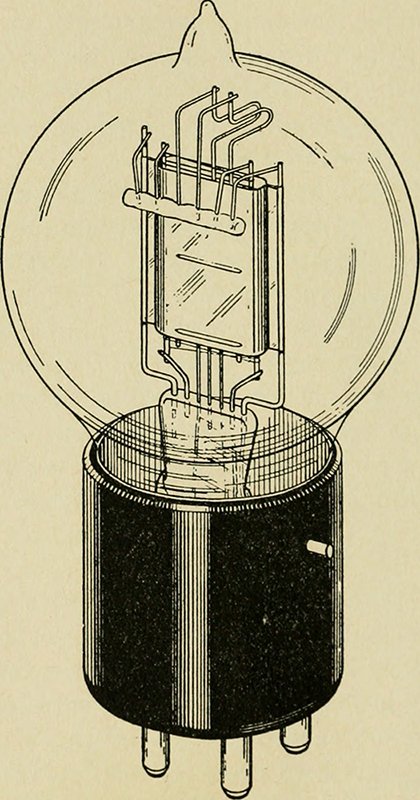
In addition, the 300B served in motion-picture sound systems. Western Electric supplied amplification hardware for cinemas in the 1930s and 1940s. Similarly, filmmakers required reliable, low-distortion output over long operating hours. For this reason, the tube later moved naturally into domestic audio.
The 300B is a physically large tube. It stands about 16 cm (6.4 in) tall and 6.1 cm (2.4 in) wide. A four-pin base carries the tube. Its anode can dissipate 40 watts of heat. Those dimensions and that thermal headroom set it apart. In contrast, radios of the same period used much smaller receiving valves.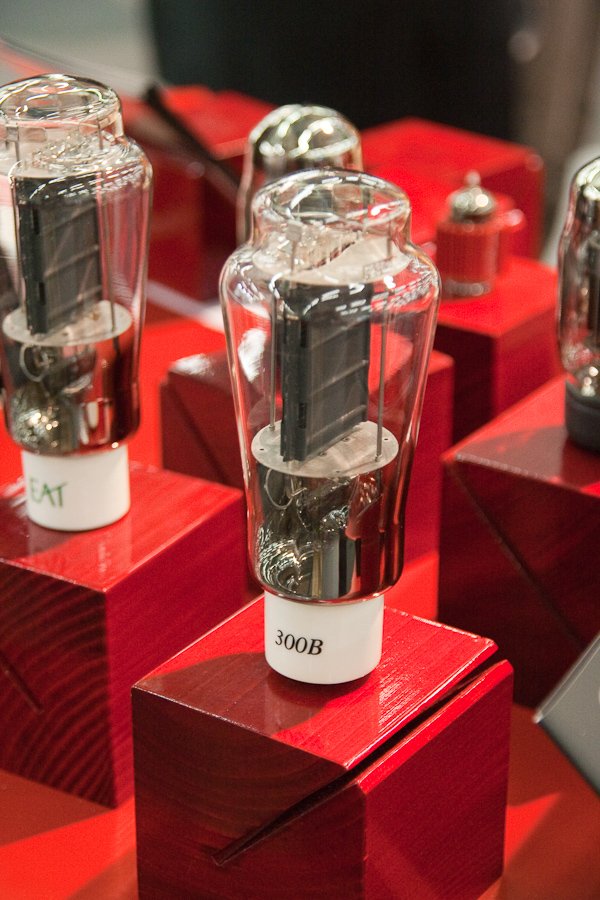
Directly heated triode
The 300B is a directly heated power triode. In a directly heated tube, the filament acts as the cathode. A triode has three electrodes: filament, grid, and plate.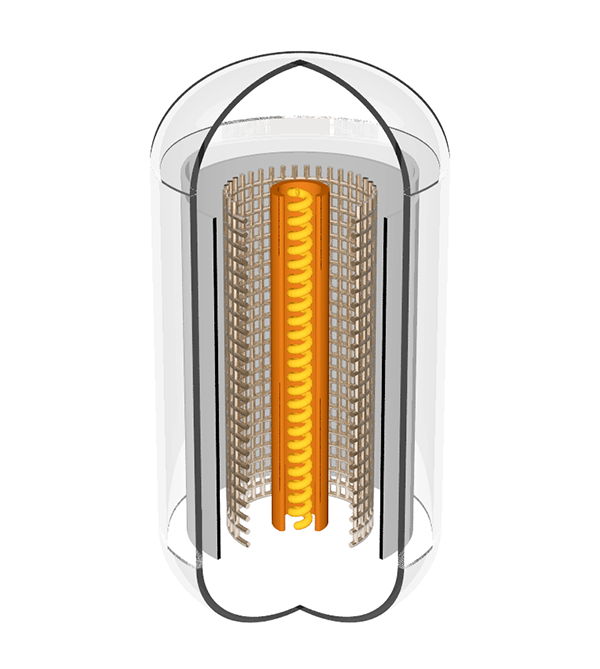
That construction gives the signal a short route. Western Electric’s own description cites good linearity, low noise and good reliability. Therefore, those qualities suited telephone service. A valve there had to work for long periods without drift or failure. The original 300B drew 1.2 amps of filament current. Consequently, later makers still use that figure as their reference.
300B amplifier: single-ended output
A typical single-ended 300B amplifier produces about 8 W per channel. In contrast, a push-pull pair can deliver around 20 W.
Western Electric ended production of the original 300B in the late 1980s. The Kansas City Works line closed, and the tube became scarce. Japanese audiophiles began using the tube in the 1970s. Subsequently, the practice spread more widely through the 1980s. That period established the single-ended triode (SET) amplifier as a distinct category. In other words, one output tube per channel defined the format.
Western Electric resumed production in 2018. The company used its 1938 manufacturing standards at the Rossville Works facility in Georgia. Moreover, by 2022, several other makers produced 300B tubes. The list included EkspoPUL (Electro Harmonix), ELROG, Emission Labs, JJ Electronic, KR Audio, TJ FullMusic, Psvane, Linlai and Takatsuki. The design has stayed in continuous use across eight decades. Therefore, that longevity explains its weight in valve audio.
Oilily A300B MK
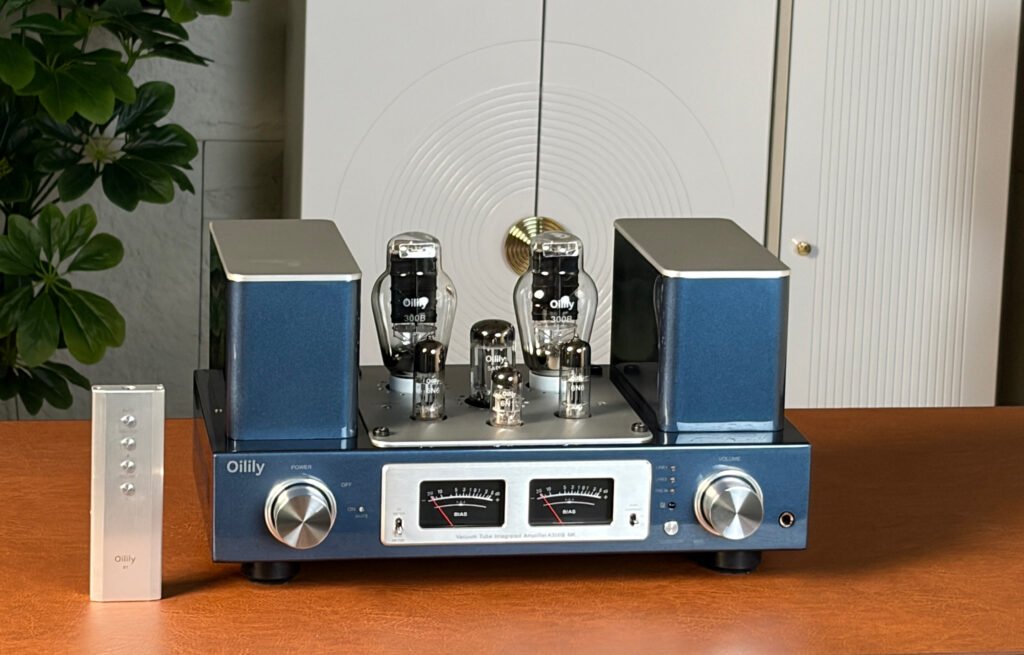
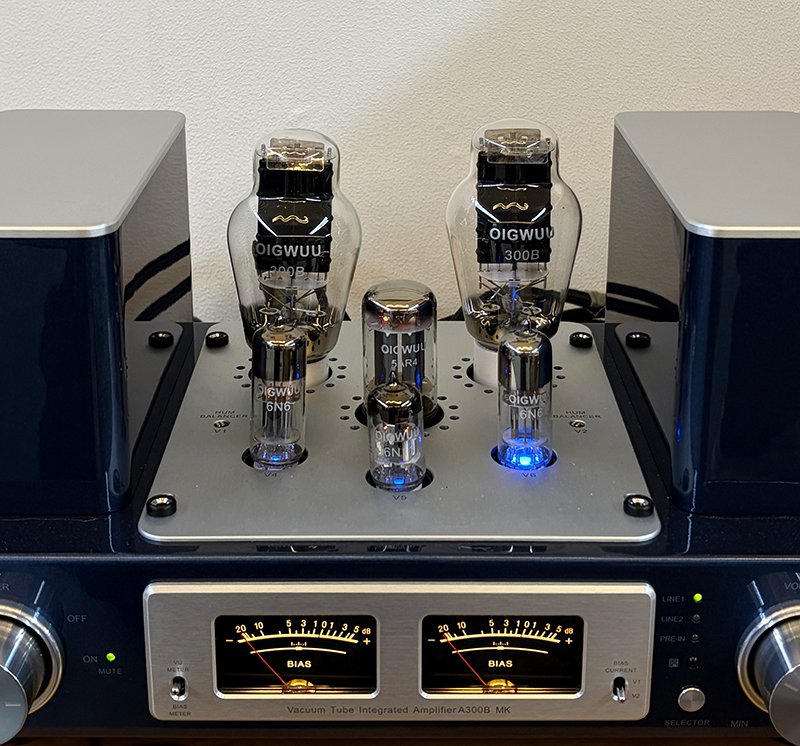
The Oilily A300B MK runs two 300B output tubes in pure Class A single-ended stereo. Its value lies in the number of functions built into one chassis. For example, these include a 300B output stage and three inputs. In addition, they include a headphone output that the 300B tubes drive. Remote-controlled volume and two meters complete the package. One meter shows tube current, the other output level. The list below gives the specifications for each function.
Value for money
Established hi-fi brands generally position comparable single-ended 300B amplifiers well above the A300B MK. Indeed, flagship 300B designs can cost many times as much. However, the core layout is the same. Two 300B output tubes run in pure Class A single-ended. Likewise, output transformers, inputs and controls follow the same pattern. As a result, the A300B MK offers strong value for money. It keeps that configuration at a far lower entry point. It is a complete 300B amplifier at a more accessible level, not a reduced specification.
300B amplifier: specifications and inputs
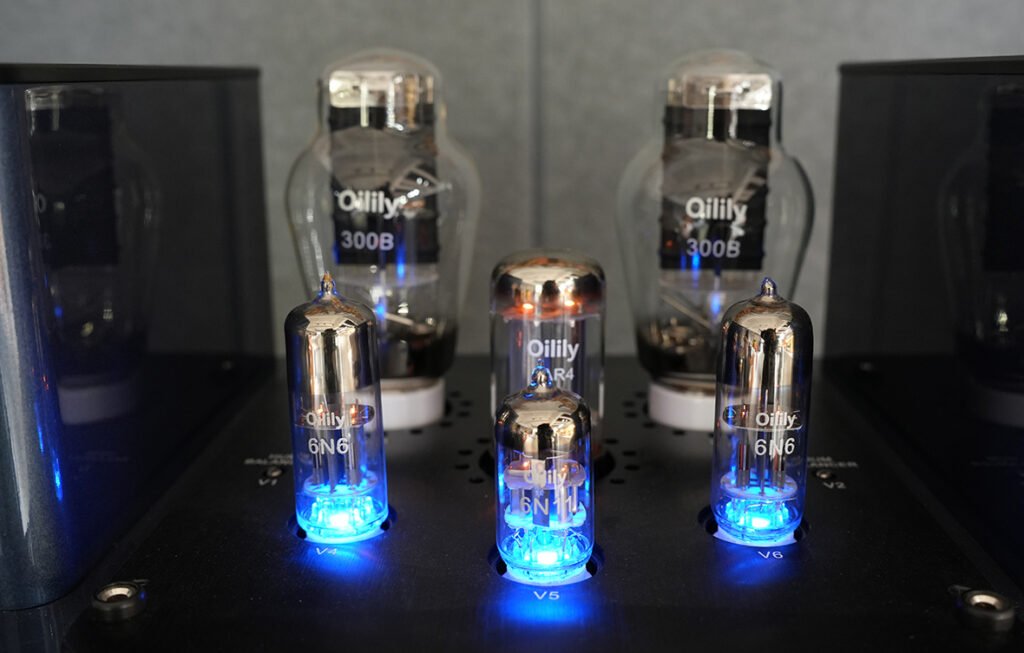
One 300B output tube serves each channel. A 5AR4 handles rectification. A pair of 6N11 and 6N6 tubes works in the voltage stage. Furthermore, the amplifier runs in pure Class A single-ended. Rated output is 8 W + 8 W into 8 ohms. Total harmonic distortion is 1%. In addition, the signal-to-noise ratio reaches 96 dB. Input sensitivity is 350 mV, with an input impedance of 100 kΩ.
A custom square power transformer and two wide-response EI output transformers support the frequency response. The range runs from 20 Hz to 25 kHz. In a single-ended design, the output transformer determines the bandwidth. Therefore, naming it alongside the frequency range makes that figure traceable to the hardware.
LINE1 and LINE2 accept two sources, such as a DAC, streamer, CD player or preamp. In addition, PRE-IN turns the amplifier into a pure power amplifier for use with an existing preamp. A Japanese ALPS motorised volume potentiometer comes with an infrared remote control. You can adjust the level from your seat. Power consumption is 150 W.
Outputs and availability
Speaker terminals offer 4 / 8 / 16 ohm taps for different cabinets. The front 6.5 mm headphone jack engages automatically when you insert a plug. Moreover, the 300B output tubes drive the jack. It covers 8–300 ohm headphones. In short, one amplifier serves both speakers and headphones.
Two analog meters show output level and 300B tube current. In addition, a toggle switch selects per-channel bias monitoring. A blue tube light stays on while the amplifier runs.
The US version uses AC 120 V ±5%, 50/60 Hz. Match the rear panel label for your region. The chassis measures 400 × 280 × 351 mm (W × D × H) and weighs 19 kg. Furthermore, working conditions span 0–40 °C at 20–80% humidity. Finally, the factory tests each unit before shipping.
To serve customers worldwide, the A300B comes in two brands. Oilily A300B MK serves the US market. Meanwhile, OIGWUU A300B MK serves Europe and all other markets outside the US. Indeed, both models come from the same factory and the same production line. Two brands let each region keep the right shipping, duties and warranty arrangements. In conclusion, music crosses borders and reaches genuine audiophiles everywhere.