


211 Tube Amplifier Matching: What to Pair With the A211 MK
211 Tube Amplifier Matching: What to Pair With the A211 MK
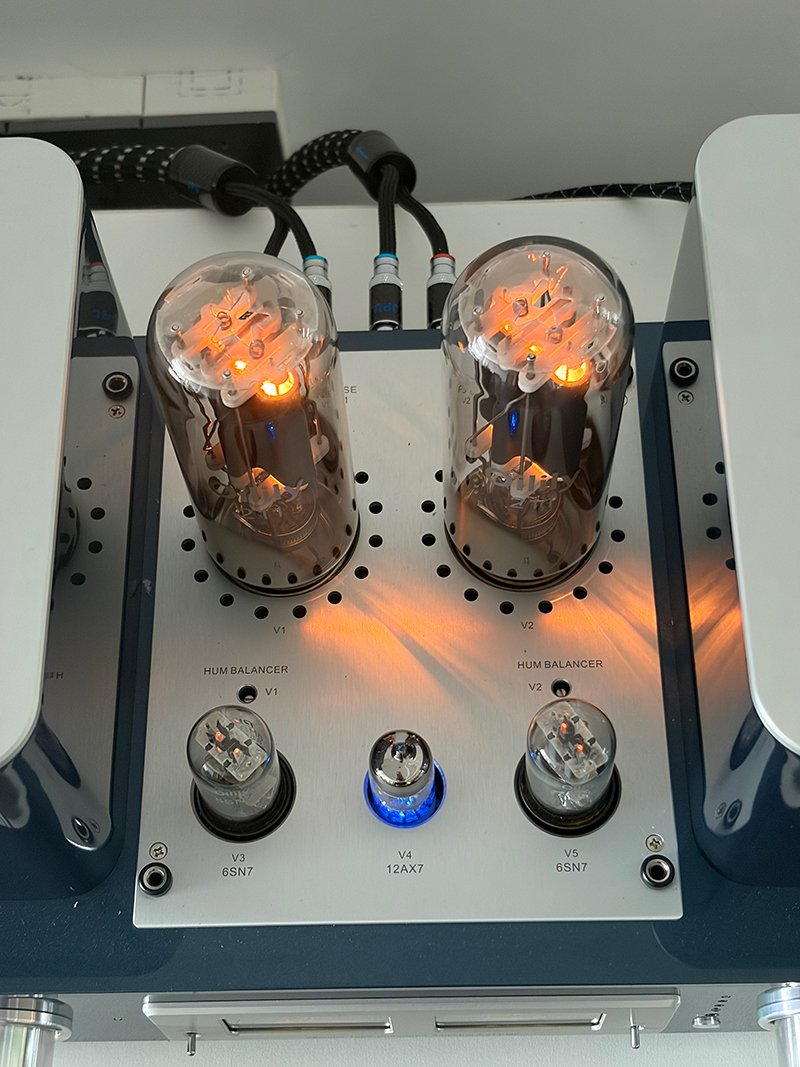
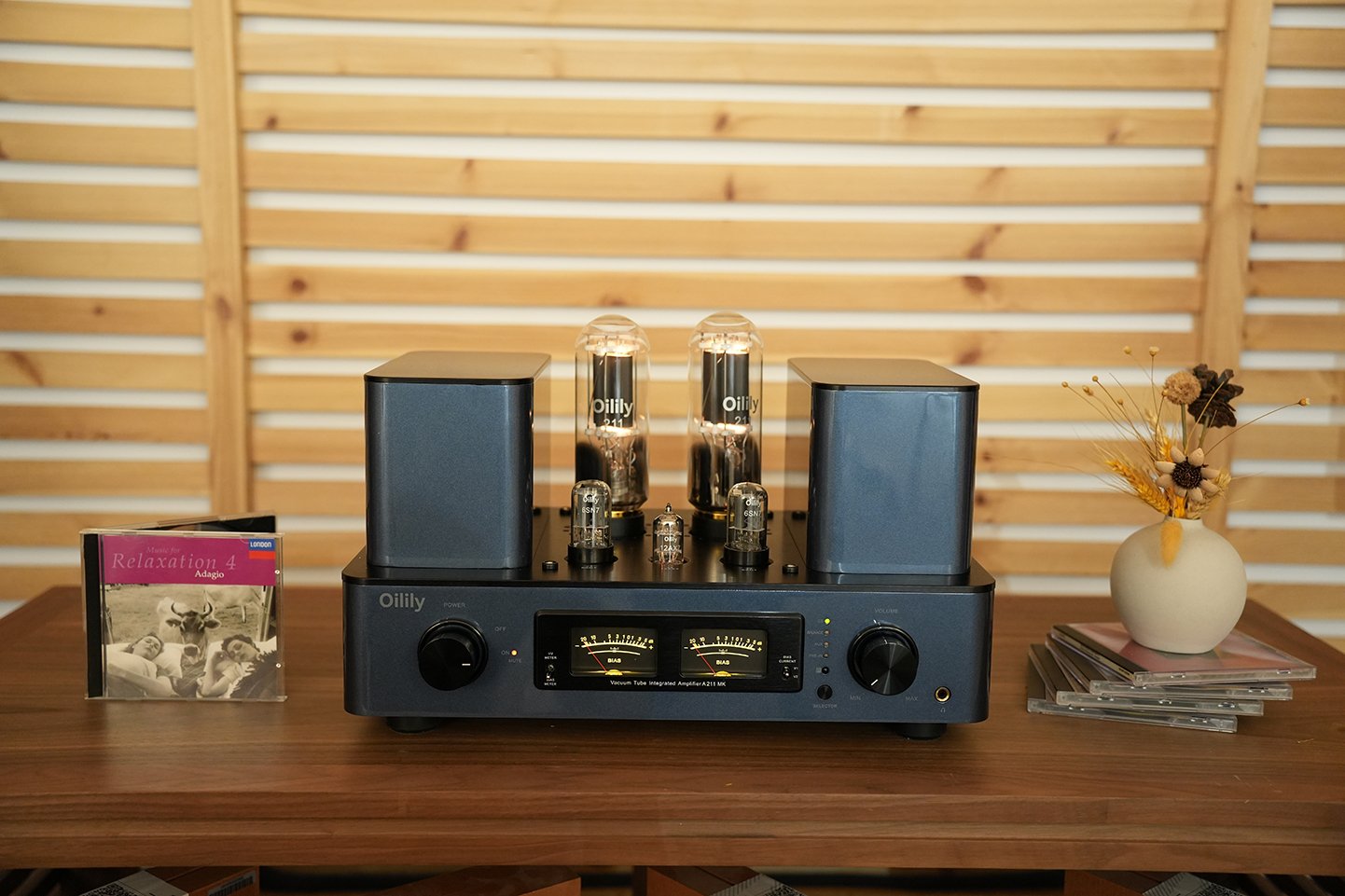
211 tube amplifier matching is the first decision you make before a single note is played. Twelve watts of single-ended Class A will only sound as good as the system built around it. The A211 MK runs two 211 tubes, with one 12AX7 in the voltage amplification stage and two 6SN7s in the driver stage. It offers four line inputs, a pure power-amplifier stage, dual meters and a remote in the box. This guide covers the four matching decisions that matter: speakers, sources, accessories and tubes.
211 tube amplifier matching: sensitivity before power
The A211 MK delivers 12W + 12W with rated output power below 5% THD, into 4, 8 or 16 ohms. Frequency response runs 10Hz–22kHz (-3dB), with THD at 0.5% (1W/1kHz). Twelve watts is enough for most rooms — provided the speakers are efficient. Low-sensitivity speakers will ask the amplifier for current it was not designed to deliver. Choose efficient designs; they are the ones that let a 211 show what it can do.
Match the tap to the speaker: 8-ohm speakers on the 8-ohm tap, 4-ohm speakers on the 4-ohm tap, 16-ohm speakers on the 16-ohm tap. The difference is audible on speakers with an uneven impedance curve.
Source and DAC matching for your 211 tube amplifier
The A211 MK offers four line inputs: LINE1 (CD), LINE2 (BALANCE), LINE3 (AUX) and LINE4 (PRE-IN). RCA input sensitivity is 380 mV; through the power-amplifier input it is 760 mV. Input impedance is 100 kΩ. For DAC matching this is forgiving: almost any modern source — a streamer, a CD player or a phono stage — will drive the amplifier to full output, and you will rarely need more than a quarter turn of the volume knob.
LINE4 (PRE-IN) is worth planning around. This input gives you a pure amplifier stage, with volume controlled by the volume knob of an external preamp. If you already own a preamp you like, connect it here rather than stacking two volume controls in series.
Headphone matching on a 211 tube amplifier
The front-panel 6.5 mm headphone jack is specified for headphones from 8 to 300 ohms, and plugging in automatically disconnects the speaker outputs. That window covers most dynamic and planar headphones, so you can move from speakers to headphones without changing any connections.
Accessory matching: cables, feet, power
Accessory matching matters less than speaker matching, but it is not nothing.
- Speaker cables: short runs, sensible gauge. With twelve watts, resistance is the enemy — keep runs compact rather than exotic.
- Interconnects: a well-shielded RCA pair is enough. The 100 kΩ input impedance means the cable is not being asked to do heavy lifting.
- Isolation: the amplifier weighs 30.5 kg net (36 kg shipping) and runs in Class A. A rigid shelf with compliant feet will do more for the sound than any tweak. Leave more than 15 cm of clearance around the cabinet and never block the ventilation openings.
- Spare tubes: keep one matched spare pair of 211s. Tubes age, and a spare pair removes the panic from a failed valve.
- Ventilation and foam: remove the protective foam packed inside the tubes before you switch on. Running the amplifier with the foam still in place can cause serious damage or fire.
- Power: the amplifier draws 220 W. Match your unit to your local mains — the manual specifies ~240 V ±5% (50 Hz) or ~120 V ±5% (60 Hz). On start-up the indicator stays red for about 30 seconds while the protection relay engages; that delay is normal.
Subwoofer matching with a 211 tube amplifier
A subwoofer can extend the bottom end, but keep its output level and upper cutoff modest. Set the crossover low, the gain low, and tune by ear rather than by numbers. The aim is to add weight below the speakers without drawing attention to the subwoofer itself.
Tube matching and rolling
Good 211 tube amplifier matching starts with the output tubes. The stock complement is 211 ×2, 12AX7 ×1 and 6SN7 ×2. The 12AX7 handles voltage amplification, the 6SN7s the driver stage, and the pair of 211s the single-ended Class A output stage.
The 211s must be used as a matched pair, and power tubes should always be replaced in pairs.
Before handling any tube, switch off the amplifier and wait at least 20 minutes for the tubes to cool down.
To remove a 211 tube, hold it by the base and rotate it counterclockwise about 45 degrees so the locating pin lines up with the slot in the socket, then pull the tube vertically upward. Never pull a 211 tube straight out without rotating it first.
To install a 211 tube, align the locating pin with the slot, insert the tube into the socket, then rotate it clockwise 45 degrees to lock it in place.
Different 211 types will give you different sonic characters — that is the point of rolling .
Change one stage at a time and listen for a week before changing another. The driver tubes shape the sound as much as the output tubes do, and a swap you cannot hear is a swap you did not need.
Ready to build your system around it
The A211 MK ships in two regional editions from the same production line. For the United States, see the Oilily A211 MK; for the European Union, the OIGWUU A211 MK. Get the 211 tube amplifier matching right, feed it a clean source, and twelve watts will be the last number you think about.